The American Chinchilla Rabbit
A Heritage Breed Worth Preserving
An American Original
The American Chinchilla Rabbit was developed in the United States in the 1920s by crossing Standard Chinchilla rabbits to increase size and commercial viability. The breed was recognized by the American Rabbit Breeders Association and quickly became one of the most popular meat rabbits in America.
Throughout the mid-20th century, American Chinchillas were a mainstay of commercial rabbit production, valued for their excellent meat-to-bone ratio, calm temperament, and distinctive rollback fur. They were bred on farms across the country and represented a significant part of American agricultural heritage.
As industrial agriculture shifted toward faster-growing hybrid breeds in the latter half of the century, the American Chinchilla fell out of favor. By the 1980s, the breed had declined dramatically. Today, fewer than 1,000 breeding animals remain in the United States, and the breed is classified as “Threatened” by the Livestock Conservancy.
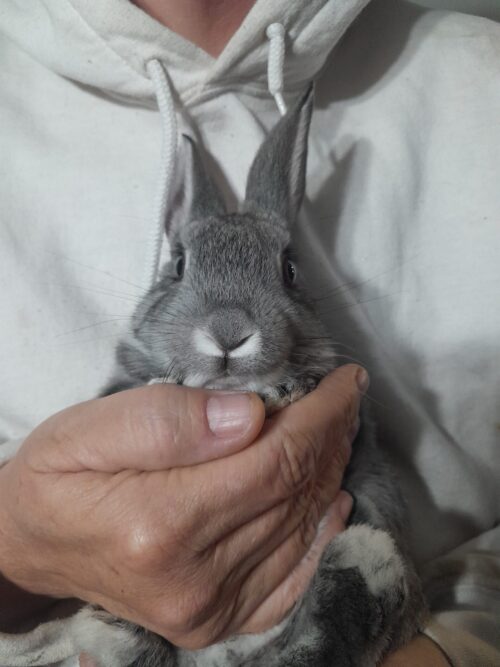
Breed Standards
According to ARBA standards, the American Chinchilla is a heavyweight breed with specific physical requirements that distinguish it from other chinchilla varieties.
Weight
Senior bucks: 9–11 pounds
Senior does: 10–12 pounds
This makes them one of the heavier commercial breeds.
Fur Type
Rollback fur with dense, soft undercoat. The unique agouti coloring creates a salt-and-pepper appearance with darker ticking.
Body Type
Commercial body type with good depth, breadth, and muscling. Well-rounded hindquarters with smooth, firm flesh.
Temperament
Known for calm, docile nature. Excellent mothers with strong maternal instincts and good litter sizes.
Coloring
Distinctive chinchilla coloring—dark slate blue undercolor with pearl intermediate band and black or dark gray surface ticking.
Ears
Erect ears with good substance, proportionate to body size. Dark lacing on ear edges is characteristic of the breed.
Why This Breed Matters
The American Chinchilla represents more than just a rabbit breed—it’s a living piece of American agricultural history and a reservoir of genetic diversity that may prove invaluable for future breeding programs.
Heritage breeds like the American Chinchilla possess traits that were selected over generations for specific purposes: disease resistance, reproductive efficiency, foraging ability, and climate adaptability. These traits cannot be easily recreated if lost.
As commercial agriculture continues to narrow its genetic base in favor of a few high-performing hybrids, heritage breeds serve as genetic insurance. They maintain diversity that may be critical for adapting to climate change, emerging diseases, or shifting agricultural needs.
“When a breed goes extinct, we lose not just the animals themselves, but centuries of genetic adaptation and agricultural knowledge. Once gone, these traits cannot be recovered.”
Threatened Classification
The Livestock Conservancy lists the American Chinchilla as “Threatened,” indicating that fewer than 1,000 breeding animals remain in the United States. This classification reflects decades of declining interest in heritage breeds as commercial agriculture favored faster-growing hybrid lines.
Small-scale breeders and heritage rabbitries like Rit Shabbit Enterprises are critical to the breed’s survival. Without dedicated conservation efforts, the American Chinchilla could disappear within a generation.
Our work focuses on maintaining genetic diversity, adhering to ARBA breed standards, and producing healthy animals that strengthen the overall population. Every litter contributes to the breed’s future.